Texas Hold'em Poker: Pokerist
- 4.4
- Rating
- 10.00M
- Installs
- Free
- Price

 Analysis by App-foxy
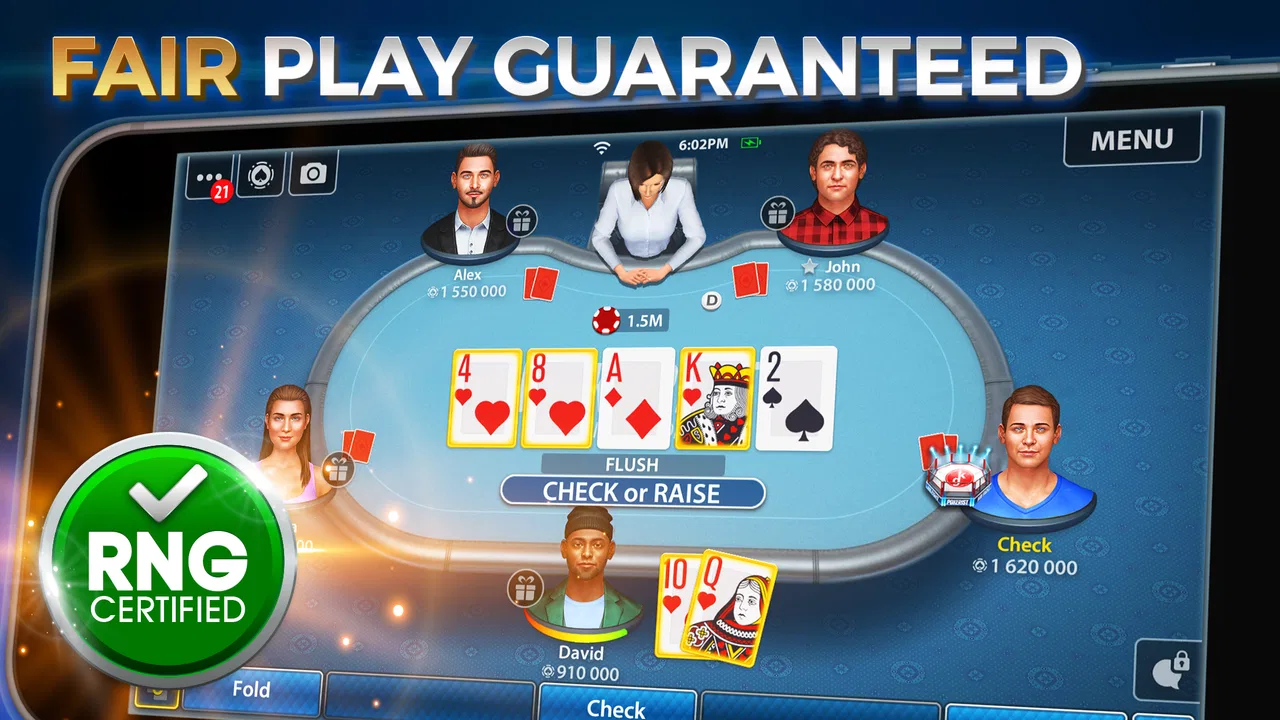
I spent time with Texas Hold’em Poker: Pokerist as a casual card game rather than treating it like a substitute for a real-money poker room. That distinction matters from the first hand. The game is free to download, puts Texas Hold’em at the center, and is built around playing against other people in a lively digital setting. It is a good fit when I want a quick poker session without arranging a table, but it also asks me to be disciplined about in-app spending and the way I use my time.
Developed by KamaGames, Pokerist belongs squarely in the card-game category. Its long presence on mobile helps explain why it feels designed for repeat visits instead of a single campaign or a short puzzle experience. The store shows a 4.4 average from around 443 thousand ratings, with more than 10 million installs. Those figures suggest a broad audience, although popularity alone is not a reason for every poker fan to choose it.
How the free entry affects the real value
The basic financial decision is straightforward: the game is free to install, so I can try the core experience without paying upfront. That makes it easy to test whether the table pace, presentation, and social atmosphere suit me. The important qualification is that optional purchases range from $0.99 to $999.99 per item. I would therefore approach it as a free-access game with a potentially expensive spending layer, not as a completely cost-free hobby.
You May Also Like

 Blood Strike: 2.5 Anniversary
Blood Strike’s Loadouts Turn Every Drop Into a Tactical Gamble
A close look at Blood Strike’s custom loadouts: how fast access to signature weapons reshapes its battle royale rhythm, rewards preparation, and narrows the gap between fights.

 Pandora - Music & Podcasts
Pandora’s Music Is Easy to Start, but Harder to Recover
Pandora’s strength is its low-effort path from a seed to a station. Its weak spot is how much confidence it asks you to place in connection, setup, and quiet recovery.

 8 Ball Pool
 Is Built on Rivalries, Rematches, and Routine
A close look at the rivalries, rematches, shared routines, and unanswered safety questions that turn a quick pool match into a persistent mobile community.

 Samsung Music
’s Quiet Strength Is Playing What You Already Own
Its reach comes less from spectacle than from dependable access to a personal library. That simplicity is both the app’s strongest retention engine and its ceiling.

 AccuWeather: Weather Radar
AccuWeather Review: A Quick, Clear Forecast for Everyday Decisions
For everyday plans, the best forecast is the one you can understand quickly. AccuWeather makes rain timing, radar, and local conditions easy to act on, with a few trade-offs.

 Hill Climb Racing
Why Hill Climb Racing Still Turns Crashes Into One More Run
A tiny car, a bumpy hill and one more upgrade: Hill Climb Racing keeps resurfacing because its simple chaos makes every near-miss feel personal.
More From Our News Desk
View All News


That distinction changes how I judge value. If I only want occasional hands, the free entry can be enough to make the download worthwhile. If I am tempted to buy repeatedly in order to stay active or recover from a poor run, the value becomes much less attractive. A sensible first session is one where I learn the flow without treating purchased resources as part of my normal entertainment budget.
I also appreciate that the price of entry does not force a long commitment. I can open a table during a short break, play a few hands, and leave. That flexibility is more useful than it sounds because poker is naturally divided into small decisions: whether to enter a pot, how much to risk, and when to fold. A mobile format works well for that rhythm, provided I am comfortable leaving a session unfinished or stopping after a short run.
For anyone asking whether the game is suitable for a child, the content rating is Teen. I would not interpret that as a recommendation for younger players, especially because the game involves competitive play and optional purchases. On a shared device, I would make sure the person using it understands that free installation and optional spending are separate things.
The value of a familiar poker format
The strongest value here is familiarity. Texas Hold’em gives me a ruleset that is easy to recognize but difficult to master. I do not need to learn an invented card system before making meaningful decisions. The useful challenge comes from reading the situation, judging risk, and resisting the urge to play every hand. That makes Pokerist more engaging than a simple solitaire app when I want interaction rather than a purely private puzzle.
It also works as a low-pressure way to keep poker habits active. I can use short sessions to think about position, starting-hand discipline, and the difference between a strong hand and a strong situation. The app does not replace studying poker strategy, but it gives those ideas a practical setting. My own best use of it is as a quick decision-making exercise, not as proof that I am ready for a serious live table.
Another useful point is social energy. Playing against other people creates uncertainty that computer opponents often fail to reproduce. A predictable artificial player can make a hand feel like a puzzle with a known answer; a human table is messier. That unpredictability is part of the appeal, though it can also make a session feel less relaxed when the pace or table mood does not match what I want.
Small habits that make sessions better
My first practical tip is to decide the purpose of a session before opening a table. If I am there to relax, I keep the session short and avoid chasing losses. If I am there to practice patience, I focus on folding weak situations instead of measuring success by how many pots I win. This simple separation prevents the game from turning every hand into a test of pride.
A second tip is to treat free play and purchases as two different decisions. I would play long enough to understand how the normal progression feels before buying anything. If the free experience already gives me enough entertainment, there is no reason to spend merely because a purchase is available. If I do choose to pay, I would set a personal limit outside the game and consider that money entertainment spending, never a way to recover virtual losses.
A third insight is that Pokerist is best used in controlled windows rather than left open whenever I have a spare moment. Poker naturally encourages “one more hand,” and mobile convenience makes that easy. I get more value when I choose a stopping point in advance, such as ending after a short break or after a defined number of hands. That is especially important for users who find competitive games difficult to put down.
I would also avoid judging my skill from a single session. Texas Hold’em contains enough short-term luck to make a good decision lose and a questionable decision win. The useful review of a hand comes afterward: did I have a reason to enter, did the betting change the situation, and was folding the better choice? Thinking this way gives the game more lasting value than simply watching the virtual balance rise or fall.
Where the experience works and where it asks for patience
The main strength is convenience. I can reach a recognizable poker table without organizing friends, finding a venue, or waiting for a complete group. That makes it a natural companion for a commute, a quiet evening, or a short pause between tasks. The card format is also easier to return to than a story-driven game because I can understand the immediate objective within seconds.
The competitive element is another advantage, but it comes with a trade-off. Human opponents make the game feel less repetitive, yet they can also create uneven experiences. Some sessions may feel calm and thoughtful, while others may feel rushed or overly aggressive. I would not choose this app if I need a consistently quiet, offline-style activity where every move happens at my preferred pace.
The purchase range is the clearest financial concern. A free game can still be good value, but only if I am comfortable enjoying it without buying. The presence of items reaching $999.99 means I would not hand the device to an inexperienced child or someone who makes impulsive purchases without safeguards. The issue is not that every player will spend heavily; it is that the ceiling makes personal boundaries important.
There is also a difference between learning poker and playing poker socially. Pokerist can help me become more comfortable with the flow of Hold’em, but it should not be my only learning tool. A beginner who wants structured lessons, hand histories, or a carefully explained curriculum may find a dedicated poker education resource more useful. Someone who wants a pure logic challenge may prefer solitaire or a turn-based card puzzle instead, because those options remove the pressure of opponents and optional spending.
Compared with playing Hold’em with friends, Pokerist wins on availability and loses on personal connection. A home game gives me conversation, shared rules, and a familiar group. Compared with a traditional real-money poker environment, this game is more accessible and less intimidating, but it should not be treated as the same kind of financial or competitive experience. Its best position is between a solo card game and an organized poker table: social enough to feel unpredictable, casual enough to open on a phone.
Who is likely to get the most from it?
I would recommend it to someone who already understands the basic rules of Texas Hold’em and wants quick practice against a broad player base. It is also suitable for a casual player who enjoys card games but does not want a long campaign, complicated deck construction, or a large time commitment before the first enjoyable round. The free download makes experimentation easy, while the familiar format keeps the learning curve manageable.
A realistic everyday scenario would be a player using it during a twenty-minute evening break. They open the game, join a table, fold a few weak hands instead of forcing action, and leave once the break ends. In that situation, the app delivers exactly what I want from mobile poker: a compact, repeatable activity with enough uncertainty to stay interesting. The value comes from the session itself, not from trying to build a permanent winning streak.
It can also suit friends who want to compare poker instincts while playing separately. Even without sitting in the same room, each person can use the game as a reason to discuss decisions afterward: why one hand was folded, why a bet looked suspicious, or how patience changed the result. That makes it more socially useful than a solitary card app, although the experience still depends on the people at the table rather than on a private group alone.
I would tell serious poker students to use it selectively. It can provide repetition, but repetition without reflection may reinforce bad habits. After a session, I would remember a few key decisions rather than only the final result. If the goal is formal improvement, combine the game with outside study; if the goal is accessible entertainment, the app stands more comfortably on its own.
I would also advise skipping it if spending controls are a major concern, if competitive tables make you tense, or if you specifically need offline play. The free label is attractive, but it does not remove the need to manage purchases. Likewise, anyone looking for a calm solo card pastime will probably be happier with a game built around personal pace rather than live-style competition.
What to expect from the current app
The current version is 71.49.0, and it supports devices running Android 6.0 or later. That makes the compatibility requirement relatively approachable for many older devices, though actual comfort will still depend on the phone or tablet. I would check the operating-system requirement before planning to use an older spare device, particularly if the game is intended for travel or a secondary handset.
The app’s history reaches back to May 11, 2011, which gives it a different character from a newly released card game. I notice that kind of maturity in the basic concept: it is not trying to reinvent poker, and its appeal comes from returning to a known format with other players. The downside is that long-running games can feel more layered and commercially focused than a simple one-purpose card app. I prefer it when I want an established poker environment, not when I want minimalism.
The large audience can be reassuring because a game with more than 10 million installs is unlikely to feel like an abandoned experiment. Still, audience size should not be confused with a guarantee that every table will match my preferred pace or skill level. I would give the game a few sessions before deciding whether the community and rhythm suit me personally.
One detail I would keep in mind is the difference between the store summary and the actual reason to return. The summary emphasizes competing against millions of players, but the lasting appeal for me is not the size of that claim. It is the repeated decision-making: entering selectively, reading changes in the hand, and accepting that folding can be the correct move. That is where the game earns its place on my phone.
My verdict on downloading and spending
My recommendation is to download it if you want free access to casual Texas Hold’em and are comfortable setting firm limits around optional purchases. The no-cost entry makes it easy to test, the card format is immediately understandable, and the social competition gives it more life than a solitary card game. I can see myself returning for short sessions when I want a familiar challenge without arranging a real table.
I would not describe it as the best choice for every poker fan. Players seeking deep instruction should look elsewhere for structured learning, while people who want a quiet offline experience should choose a different type of card game. Anyone vulnerable to chasing losses should be especially cautious because the purchase range is broad and the hand-by-hand format encourages continued play.
For me, the right way to use Pokerist is as a controlled, free-first pastime. I would learn the table flow, play with patience, stop before a short break becomes an entire evening, and keep purchases separate from the idea of winning. Used that way, Pokerist offers a convenient and genuinely enjoyable mobile poker experience. The value is strongest when I pay for the entertainment only with attention and time, not with the expectation that spending will improve my results.
That makes Texas Hold’em Poker: Pokerist an easy recommendation for curious casual players, a conditional recommendation for regular competitors, and a clear skip for anyone who needs strict simplicity or has trouble keeping optional spending under control.
FAQs for Texas Hold'em Poker: Pokerist
01What platforms is Texas Hold'em Poker: Pokerist available on?
Texas Hold'em Poker: Pokerist is available on both Android and iOS platforms. You can download it from the Google Play Store for Android devices and the Apple App Store for iOS devices. The game is optimized for mobile play, ensuring a smooth experience regardless of the device you are using.
02Is Texas Hold'em Poker: Pokerist free to play?
Yes, Texas Hold'em Poker: Pokerist is free to download and play. However, it offers in-app purchases that allow players to buy chips and other resources to enhance their gaming experience. While you can enjoy the game without spending money, these purchases can provide additional benefits.
03Does Texas Hold'em Poker: Pokerist require an internet connection?
Yes, an active internet connection is required to play Texas Hold'em Poker: Pokerist. The game is designed to be played in real-time with other players from around the world, necessitating a stable internet connection to ensure seamless gameplay and interaction with other users.
04Can I play with friends on Texas Hold'em Poker: Pokerist?
Absolutely! Texas Hold'em Poker: Pokerist allows you to invite friends to play at your table. You can connect with friends via social media or use the in-game friend list to set up private games. This feature makes it easy to enjoy poker nights with your friends online, no matter where they are.
05Are there any tutorials or guides for beginners in Texas Hold'em Poker: Pokerist?
Yes, Texas Hold'em Poker: Pokerist includes a comprehensive tutorial for beginners to learn the basics of the game. The tutorial covers rules, strategies, and tips to help new players get started. Additionally, the game offers practice tables where you can hone your skills before joining real-money games.
Pros
- Smooth
- intuitive user interface.
- Daily bonuses keep players engaged.
- Wide variety of poker tables.
- Engaging social features and chat.
- Customizable avatars for personalization.
Cons
- In-app purchases can be pricey.
- Occasional connectivity issues.
- Ads can be intrusive at times.
- Limited offline play options.
- Some features locked behind paywalls.

Texas Hold'em Poker: Pokerist
Gallery